


Walking on Private Land: The Story Behind Three of New Zealand's Best Tracks

Updated: Jun 24
Most walking tracks in New Zealand are managed by the Department of Conservation. You book a hut, pick up your gear, and set off through public land. Nobody greets you at the gate. Nobody has cleared that path for you personally. The land has simply been set aside for walkers to use.
A private walking track is something different.
When you walk a private track, you are a guest. The farmer who owns the land has chosen to open it. The hut you sleep in was built for you. The path was laid out not by a government agency but by someone who knows every gully and ridge line from a lifetime of working there. You cross swing bridges, pass through wool sheds, and sometimes, if you are lucky, get a story from a landowner who has been watching the weather on that hill for forty years.
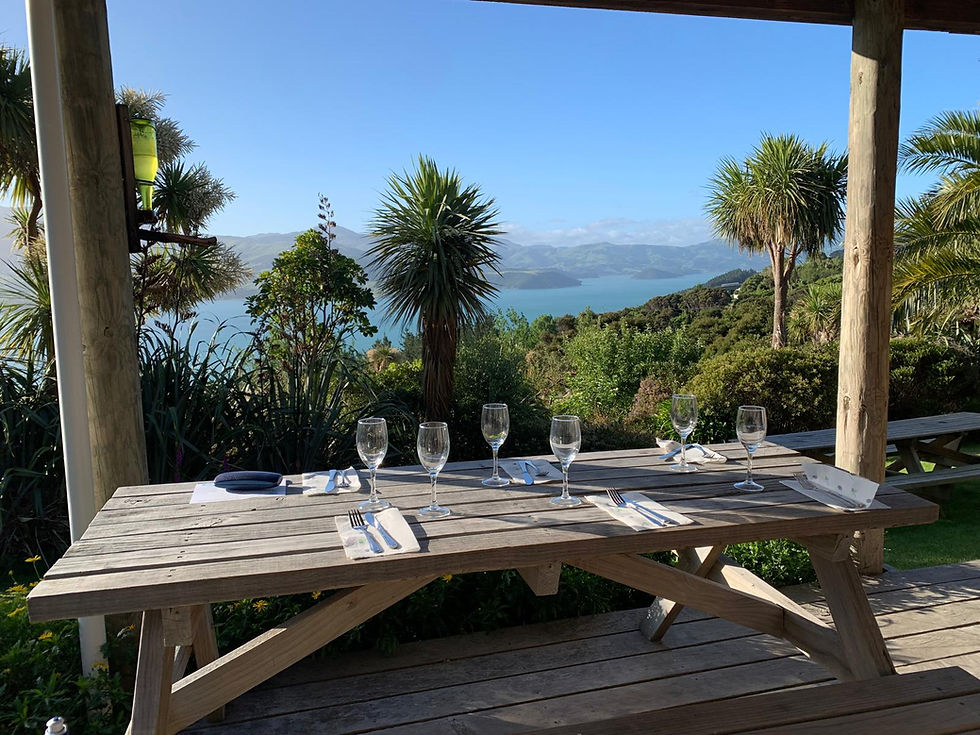
Private walking tracks are an important part of the Sidetracks Women hiking programme. Most of our hiking tours follow private tracks, with the Queen Charlotte Track and Nydia Track being the main exceptions. Two newer North Island examples, the Nuku Track and the White Star Track, opened to walkers last season.
This blog focuses on three South Island tracks close to Christchurch: the Banks Peninsula Track, the Kaikoura Coast Track, and the Island Hills Station Track. All three cross working farms, and each one came into existence for reasons that say something real about the history of this country.
Where it began: New Zealand's first private walk
In the late 1980s, New Zealand's farming sector was in trouble. The government had removed farm subsidies - a change that sent shockwaves through rural communities that had depended on them for decades. Farmers had to find new ways to make their land pay.
On Banks Peninsula, a group of landowners had an idea. Their farms crossed some of the most dramatic coastal terrain on the South Island - an ancient volcanic landscape with views over the Pacific Ocean, penguins nesting in remote bays, and native bush returning slowly to former farmland. What if they opened that land to walkers?
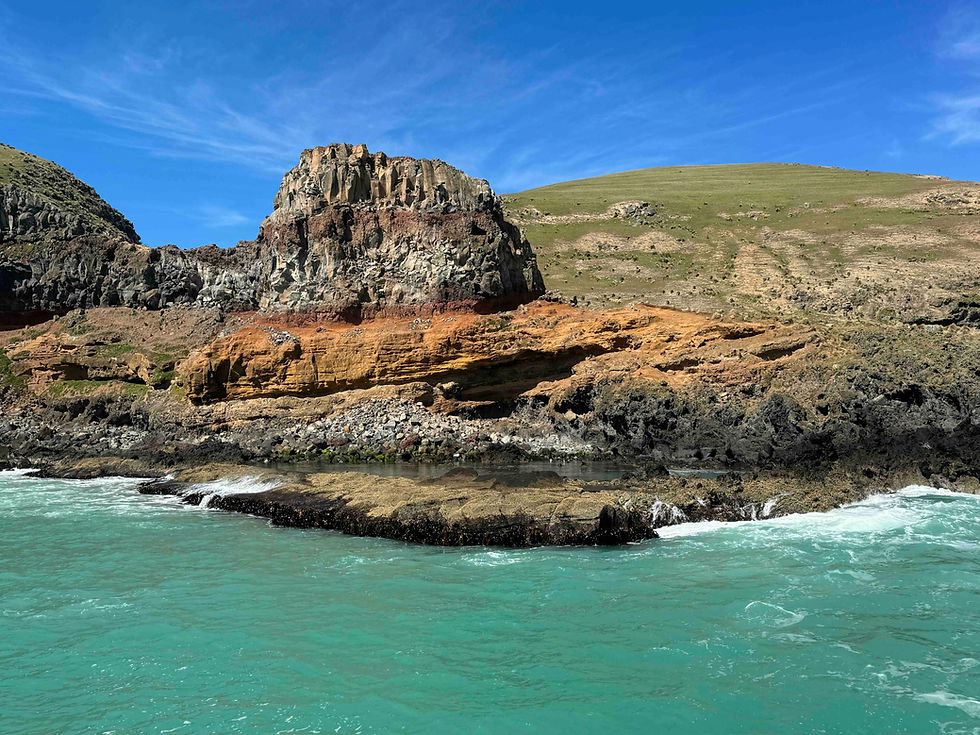
The Banks Track opened in 1989. It was the first privately owned walking track in New Zealand. The landowners formed a limited liability company to manage it, with each farmer receiving an annual sum based on the land they contributed and the work they did to maintain it. The model worked. The track attracted international attention, and it has been running ever since. Today it is stewarded by five landowner families - the Gibbs, Hamilton, Helps, and Armstrong families, together with the team at Hinewai Reserve. The Hamilton family has farmed Onuku, the starting point of the track, since the 1850s. The Helps family donated the beech forest above Flea Bay to the nation. Each family manages their own section of the track alongside working their land.
Banks Peninsula itself is ancient. The peninsula is the eroded remnant of three volcanoes, with Lyttelton Harbour and Akaroa Harbour the flooded remains of two of those craters. Māori knew it as Te Pataka o Rakaihaitu - the food storehouse of Rakaihaitu.
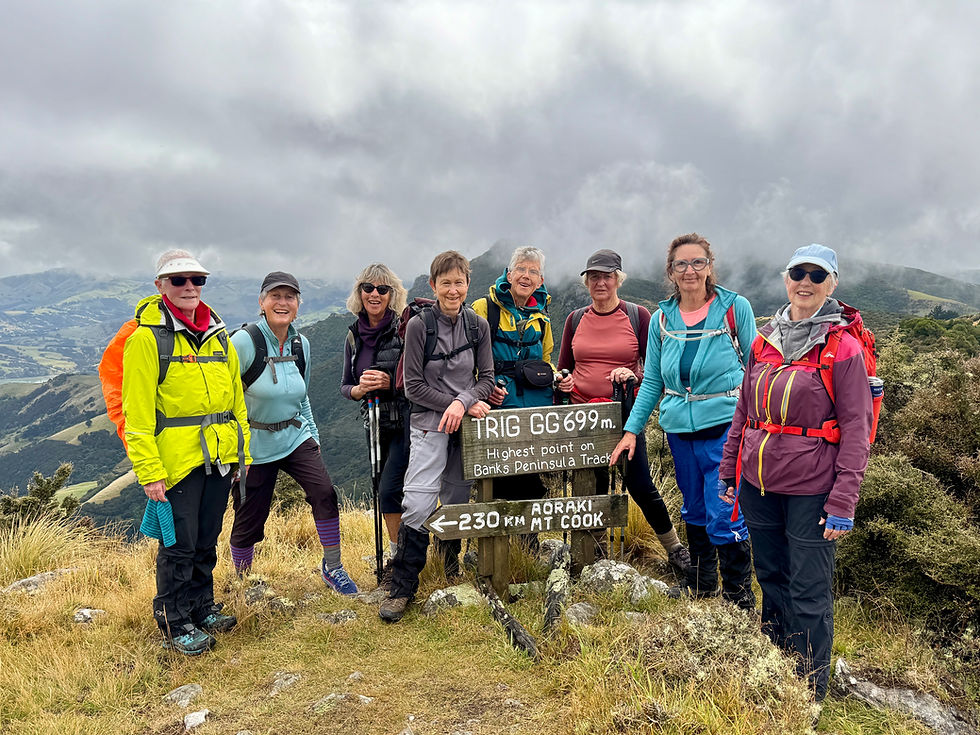
When you reach the 699-metre summit trig on Day 1 - climbing roughly 450 metres from the first night's accommodation at Onuku - and look out over the Pacific on one side and Akaroa Harbour on the other, you are standing on the rim of a volcano that last erupted millions of years ago.
Neighbours who followed
The Kaikoura Coast Track opened in the early 1990s. Three farming families - the Fyffe, Mackle, and Davison families - had watched the Banks Track take shape and were inspired to try something similar on their own land south of Kaikoura township.
The Fyffe name carries particular weight in that part of New Zealand. The Fyffe House was built in 1860 - it still stands today, a historic property built partly on piles made from whalebone vertebrae, a relic of Kaikoura's whaling era. The families' land stretches from the Hawkswood Range down to a coastline that Māori had used as a highway and fishing ground for hundreds of years. One early name for the Kaikoura region was Te Taumanu-o-te-waka-a-Maui: the seat of Maui's canoe, the place where the legendary fisherman braced his foot to pull the North Island up from the sea.
The track the three families created crosses that same coastline. Walkers pass an ancient Māori camp site, walk along beaches embedded with fossilised shells, and climb to ridge tops with views stretching from Banks Peninsula all the way north to the Seaward Kaikoura Range.
A fourth-generation farm in the high country
Island Hills Station is different again. The 8,000-hectare farm in the Hurunui hinterland of North Canterbury has been in the Shand family for four generations. The original walking track - then known as the Hurunui High Country Walk - opened some years ago, closed in 2014, and reopened in 2020 under the Island Hills Station name with new trails added to the route.
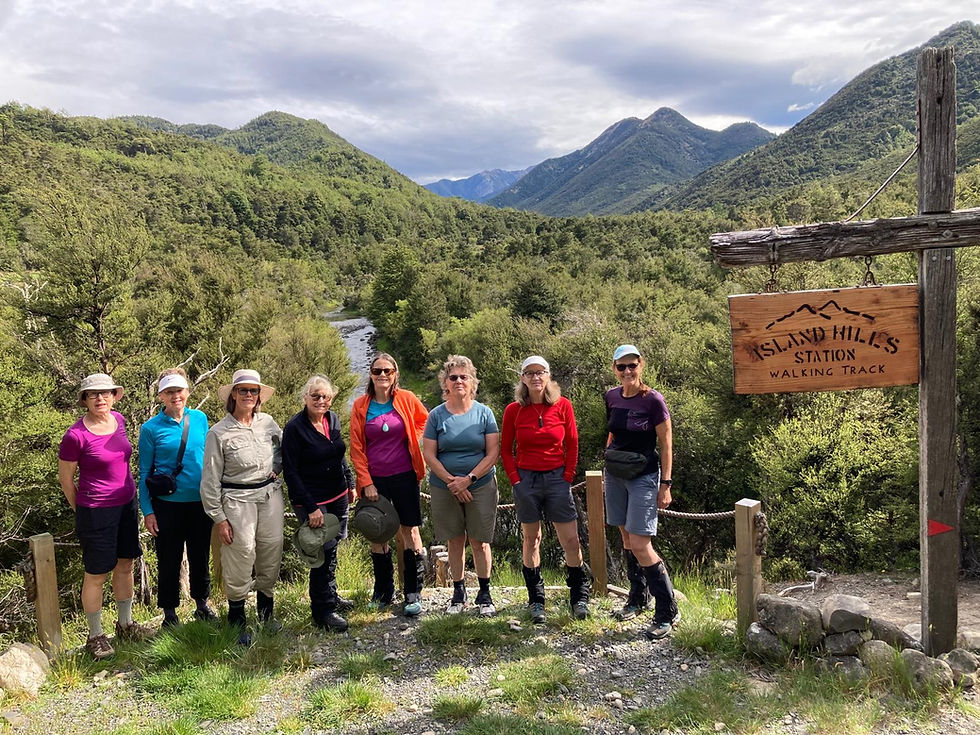
The reopening was described by the NZ Herald as a 'passion project'. And looking at the land, it is easy to understand why. The farm sits between the Lewis Pass tourist route and Hanmer Springs, in a valley that sees far fewer visitors than either of those places.
Once you cross the swing bridge over the Mandamus Gorge and lose your mobile coverage, you are genuinely in the back country - even though Christchurch is less than two hours away.
The track follows part of a historic Māori pack route that was later used by early European settlers travelling from Lewis Pass with packhorses. The Cookhouse - the first night's accommodation – was built at the turn of the 20th century, when the station was first established. The property includes Canterbury's largest Queen Elizabeth II National Trust covenant, a 600-hectare wilderness reserve where forest regeneration and pest control have been underway for years.
A movement that grew, contracted, and is growing again
The Banks Track and the Kaikoura Coast Track were among the first private walks in New Zealand, but they were not alone for long. During the 1990s and 2000s, other landowners followed a similar path. By the 2010s, however, a number of private tracks had quietly closed - some because the economics had shifted, some because the families involved had moved on, some simply because the maintenance demands of running a track through remote terrain are significant and unrelenting.
In recent years the picture has changed again. New private tracks have opened. The private walk sector now has its own dedicated website, privatewalks.nz, and a book about the country's private walks was in preparation at the time this was written. Some of the newer tracks offer accommodation that would not look out of place in a boutique hotel - private rooms, ensuite bathrooms, restaurant-quality food.
These three South Island tracks sit in a different place on that spectrum. They are comfortable - genuinely comfortable - with hot showers, proper beds, and good food prepared by your guide. But they are not luxury lodges. You sleep in bunk rooms rather than private rooms. You eat together around a shared table. The huts have personality rather than polish.
There is something to be said for that. The farmers who built these tracks were not building hotels. They were opening their land - the land they live and work on - to people who wanted to walk through it. The experience you have on these tracks is closer to being a welcome guest on a working farm than to staying in a high-end retreat. For many women who have walked with Sidetracks Women, that is precisely the point.
So which track is right for you?
If you are new to multi-day hiking, or returning to it after a break, the Kaikoura Coast Track is a good place to start. It is the shortest of the three - three days, two nights - and it is graded easy to moderate. It is also the closest to Christchurch: two and a half hours by road. You can be back in the city by seven o'clock on the last evening.
The Banks Peninsula Track asks a little more. Day 1 involves a climb of around 450 metres to the 699-metre summit trig. Day 3 is the most demanding, with up to 700 metres of total elevation change - and some sections can be slippery after rain. But the track rewards the effort: the harbour cruise on the first afternoon, the penguin colony at Flea Bay, the volcanic geology underfoot the whole way. It is New Zealand's original private walk, and it still feels like something original.
Island Hills Station is for the women who want to go deeper. Three full days of walking in the high country, three nights in accommodation where the character of the station is very much part of the experience, with no mobile signal and mountains on the horizon from morning to evening. The tour extends to five days with a night in Hanmer Springs at the end - time for the hot pools, a good meal, and a gentle re-entry into the world you left behind.
All three tracks can be walked as standalone tours. The Kaikoura and Banks Peninsula tracks can also be combined: they run back-to-back in November and March, with a single night in Christchurch between them. If you have ever wondered what a week of walking through two completely different corners of coastal Canterbury would feel like, that combination is worth considering.
Details for all three tours are on the Sidetracks Women website. If you are not sure which one suits you, get in touch - we know these tracks well, and we are happy to help you choose.
Comments